
5 answers

Deriah
Student
Savannah, Georgia
1
Question
Asked
1150 views
What are some ways I can put my Health Science degree to use?
I am a Health Science major at Georgia Southern University in my second year. Since Health Science alone is pretty broad, I'm trying to explore different career paths. I'm honestly bit sure what all is out there. If you work in health science, what is your specific career and what is one thing you wish you knew before you started?
Login to comment
5 answers

Kazi Rubayee
Oriental medicine health professional, Acupuncturist, Holistic health practitioner
92
Answers
New York, New York
Updated
Kazi’s Answer
Thinking about and exploring a career, especially in the 2nd year of health science program, is great and advanced.
The health care field is expanding, and so is the future of health sciences, which is preparing you for natural science. Social science and the healthcare system. You have many options in both clinical and non-clinical fields.
Options:
Clinical field if you like to direct work with patients: X-ray technician, paramedics, pharmacy, laboratory technician, physician assistant.
Non-clinical if you like to work from behind the scenes: health information manager, public health specialist, health data analyst. These jobs are available in hospitals, clinics, government agencies, and research labs.
What you need to do to gain experience
Shadowing, volunteering, and internship
Join the groups (health science-related)
Best,
The health care field is expanding, and so is the future of health sciences, which is preparing you for natural science. Social science and the healthcare system. You have many options in both clinical and non-clinical fields.
Options:
Clinical field if you like to direct work with patients: X-ray technician, paramedics, pharmacy, laboratory technician, physician assistant.
Non-clinical if you like to work from behind the scenes: health information manager, public health specialist, health data analyst. These jobs are available in hospitals, clinics, government agencies, and research labs.
What you need to do to gain experience
Shadowing, volunteering, and internship
Join the groups (health science-related)
Best,

Destiny Hankerson
Athlete, Artist, and Writer
35
Answers
East Orange, New Jersey
Updated
Destiny’s Answer
That's a great question! I'm also studying Health Science, so perhaps I can give you some ideas. Although Health Science is a broad degree, one of its benefits is that you're not locked into a particular healthcare path. So, you have many options to choose in your career.
One thing that helped me is to consider how I could use this degree to focus on other interests. I've always had an interest in research, for example. My health science studies have helped me to learn how to conduct research, and I've used this knowledge to create future pathways towards my career. There's a need for research on how modern technology affects human health, so this is an area I'm exploring with my Health Science degree. I'm now preparing for a fellowship on digital technology research.
So, it could help if you find a certain area of health science that interests you the most, and then you can look for career opportunities or internships related to that sphere. For example, if you have an interest in health education, and you want to help your community improve their health, you can explore certificates or courses for health educators.
As Kazi mentioned, you can choose both clinical and non-clinical paths with your health science degree. Although I don't have a formal job in healthcare yet, some of the career preparation work I've been doing is focused on research, especially research on technology's effects on human health.
One thing I wish I knew before I started Health Science is that you don't have to be locked into a certain path. In the beginning, I thought Health Science would limit me to only clinical roles or working in a hospital. Later, though, I learned that Health Science careers are wide-ranging, and you don't have to worry about being limited to one role.
I hope this answer gave you some useful tips! Good luck with your Health Science degree, and remember you have many options!
One thing that helped me is to consider how I could use this degree to focus on other interests. I've always had an interest in research, for example. My health science studies have helped me to learn how to conduct research, and I've used this knowledge to create future pathways towards my career. There's a need for research on how modern technology affects human health, so this is an area I'm exploring with my Health Science degree. I'm now preparing for a fellowship on digital technology research.
So, it could help if you find a certain area of health science that interests you the most, and then you can look for career opportunities or internships related to that sphere. For example, if you have an interest in health education, and you want to help your community improve their health, you can explore certificates or courses for health educators.
As Kazi mentioned, you can choose both clinical and non-clinical paths with your health science degree. Although I don't have a formal job in healthcare yet, some of the career preparation work I've been doing is focused on research, especially research on technology's effects on human health.
One thing I wish I knew before I started Health Science is that you don't have to be locked into a certain path. In the beginning, I thought Health Science would limit me to only clinical roles or working in a hospital. Later, though, I learned that Health Science careers are wide-ranging, and you don't have to worry about being limited to one role.
I hope this answer gave you some useful tips! Good luck with your Health Science degree, and remember you have many options!

Diane Coles
Limited Licensed Professional Counselor
26
Answers
Detroit, Michigan
Updated
Diane’s Answer
Hello Deriah:
You may want to first start at your college or university and speak with and academic advisor about other careers in health science. You may also want to do some informational interviewing with other Health Science professionals to see what the pros and cons of working in a health science profession. You may want to also see if you are able to do some job shadowing or some volunteering in the Health Science profession. Remember to take your time you do not have to be in a hurry and you do not need to compete with anyone. Also the Health Science profession is not for everyone you might want to switch your major. You should focus on a career that you like and that will bring you joy.
Best Wishes and Good Luck
Clinician Coles
You may want to first start at your college or university and speak with and academic advisor about other careers in health science. You may also want to do some informational interviewing with other Health Science professionals to see what the pros and cons of working in a health science profession. You may want to also see if you are able to do some job shadowing or some volunteering in the Health Science profession. Remember to take your time you do not have to be in a hurry and you do not need to compete with anyone. Also the Health Science profession is not for everyone you might want to switch your major. You should focus on a career that you like and that will bring you joy.
Best Wishes and Good Luck
Clinician Coles
Hwal Lee
DMSc, PA-C
293
Answers
Albany, New York
Updated
Hwal’s Answer
Deriah,
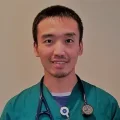
I earned my B.S. in Sports and Health Sciences as a transfer student, so by the time I started the program, I already knew I wanted to apply to PA schools. The health science, as you said, is a broad field. I considered undergraduate majors in several related but more focused fields like psychology and public health. In the end, I'm glad I chose health sciences because I was able to explore such a variety of topics from health economics and exercise physiology to statistics and epidemiology. Just as importantly, I had so much fun with my undergraduate classes. I am interested to hear what made you decide to study health sciences and what your goals are.
Let me share this article on health sciences on the American Public University's website:
https://www.apu.apus.edu/area-of-study/nursing-and-health-sciences/resources/what-is-health-sciences/#:~:text=By%20definition%2C%20the%20health%20science,functions%20and%20how%20diseases%20occur.
Let me know if you have any specific questions I can help with.
Hwal
I earned my B.S. in Sports and Health Sciences as a transfer student, so by the time I started the program, I already knew I wanted to apply to PA schools. The health science, as you said, is a broad field. I considered undergraduate majors in several related but more focused fields like psychology and public health. In the end, I'm glad I chose health sciences because I was able to explore such a variety of topics from health economics and exercise physiology to statistics and epidemiology. Just as importantly, I had so much fun with my undergraduate classes. I am interested to hear what made you decide to study health sciences and what your goals are.
Let me share this article on health sciences on the American Public University's website:
https://www.apu.apus.edu/area-of-study/nursing-and-health-sciences/resources/what-is-health-sciences/#:~:text=By%20definition%2C%20the%20health%20science,functions%20and%20how%20diseases%20occur.
Let me know if you have any specific questions I can help with.
Hwal

Nathalye Lopez
40
Answers
Updated
Nathalye’s Answer
I'm in my final semester of physician assistant school. Before this, I worked as a health educator with the Los Angeles Department of Public Health. I was part of the COVID-19 call center team, helping providers get set up to receive vaccines. I wish I had known earlier that it's okay to change careers and that everyone moves at their own pace, so there's no need to compare yourself to others. You know yourself best and understand everything you've done to get where you are.