

Jada
Question from a 9th grader: How did you get started in your career, and what choices helped you the most?
Hello! I am a 14-year-old 9th-grade student from the United States. For a school assignment, I am exploring potential future career paths and learning about what it takes to succeed in the professional world.
I have a wide range of interests right now, including therapy/mental health, law enforcement, law, architecture, writing, and military service (especially the Air Force).
If you work in any of these fields, I would love to hear your insights. To help me complete my assignment data, please include the following background information at the beginning of your response:
Occupation:
Current Age:
Sex:
The year you started working in this field:
The Country and State you work in:
Company name (if you are comfortable sharing) or general field:
In your reply, please also include these details about your journey:
Your Journey: How did you get started, and what steps did you take to get where you are today (such as specific classes, internships, or volunteering)?
Opportunities: How did you find those opportunities, and what were the main benefits of doing them?
Decisions: What opportunities did you choose to take—or pass up—and why?
Obstacles & Advice: Is there anything currently holding people back in your field, and what do you recommend a student my age do (or avoid doing) to move forward?
Thank you so much for your time and for sharing your input! Your advice will help me a lot as I plan my next steps.
6 answers
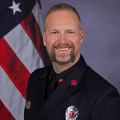
Ryan Pfeiffer, MA
Ryan’s Answer
Probably more of interest to you is that I started in law enforcement, went into the Air Force, and then left to become a firefighter. Of note, I also have a Masters Degree in Counseling.
I started my career as a law enforcement explorer - a kind of internship / volunteer program for people not of age to serve yet. Its a very popular program, so if you ask around you may find one near you.
Regarding obstacles and decisions: I choose to go to college in Florida to study at the best school that matched my interests, I choose to get certified as an EMT even though I thought I couldn't handle it, and I choose to leave the Air Force after many years to pursue a whole new career - a very difficult but rewarding decision.
If you have any more specific questions that will help you, please let me know.
 Wow, that's really amazing that you committed to public safety for 20 years, that's one of the reasons why I'd wanna join either the fire department or police department, It's becomes one of those jobs that feel like a very honorable hobby. What's really amazing about this is the fact you kind of did everything I wanted too, I guess I really don't have to pick one. Thank you!
Jada
Definitely - I know it feels like there is a lot of pressure at your age to pick THE career you're going to do, but that's not really the way it works. People change careers all the time, work multiple jobs, part time jobs, side hustles, hobbies, etc. For example, you could work part-time as an EMT while doing AFROTC and studying nursing in college. Then graduate and become an Air Force flight nurse, find a volunteer fire department that needs help near each base you're stationed at. Retire after 20-years on active-duty at 42-years old. Then do another 20-years as an architect, and write novels in your free time. Sounds like a great life to me.
Ryan Pfeiffer, MA
Wow, that's really amazing that you committed to public safety for 20 years, that's one of the reasons why I'd wanna join either the fire department or police department, It's becomes one of those jobs that feel like a very honorable hobby. What's really amazing about this is the fact you kind of did everything I wanted too, I guess I really don't have to pick one. Thank you!
Jada
Definitely - I know it feels like there is a lot of pressure at your age to pick THE career you're going to do, but that's not really the way it works. People change careers all the time, work multiple jobs, part time jobs, side hustles, hobbies, etc. For example, you could work part-time as an EMT while doing AFROTC and studying nursing in college. Then graduate and become an Air Force flight nurse, find a volunteer fire department that needs help near each base you're stationed at. Retire after 20-years on active-duty at 42-years old. Then do another 20-years as an architect, and write novels in your free time. Sounds like a great life to me.
Ryan Pfeiffer, MA

Jaime Freed
Jaime’s Answer
What a fun assignment! Here are my answers; I hope they help.
Occupation: Lawyer/Legal editor
Current Age: 42
Sex: Female
The year I started working in this field: 2010
The Country and State I work in: New York, U.S.A.
General field: Legal editing
My Journey: I was interested in both the law and writing in college, so I majored in English and took a few legal studies classes. To be honest, I wasn’t sure what I wanted to do but I knew I liked school and wanted a profession, so I chose to pursue law school. I interned for a judge in the summer before law school began, which gave me a good introduction into the field and the terminology/processes.
Opportunities: The interning opportunity came from a friend of my dad’s. I have found that most of my career opportunities have come through a combination of my own work/research/initiative and my personal contacts and relationships. It’s so important to foster those relationships and network. It brings so much value to your life and career, and that personal touch can really open doors. I don’t think I would have my current job if I didn’t have a former colleague submit my resume for me!
Decisions: I chose to take the opportunity to go into big law because I was told that it wasn’t something you should turn down. I think it brought some valuable learnings and I’m happy for the path I took, but sometimes I wonder if I had started at a slower paced firm, whether I’d have lasted longer in the actual practice of law. But, again, I’m so grateful for where I ended up! My current job combines my two interests in such a perfect way for me.
Obstacles & Advice: I think my best advice is to take initiative and pursue interests, but don’t think of it as getting to a finish line and try not to put pressure on yourself. I recently heard a quote from the show Shrinking that resonated with me: you only know whether you’ve made the right or wrong decision once you’ve made it. Get comfortable with making wrong turns and mistakes and look at them as insights and lessons that help you! You can always change your mind when you know more.
Best of luck!
Jaime
Thank you for your response, I don't think I put this in my interests but, I feel like if I did go into law I'd aim for becoming a legal advisor, I'm really happy it worked out for you, I've been told very contradicting things about how you make your pathway to success, either creating a network of people to give you advice an push you there, or taking the initiative yourself. I honestly feel like you did both, you friend may have pushed you to it but, YOU took the chance. Putting myself out there is something I have to work on, very extroverted but it's daunting for me to ask for help sometimes. Thank you!
Jada
DENNIS A BREEN
DENNIS A’s Answer
I am a lawyer and teacher and candidate.
I am 75 years old.
Male
1983 I started in New York City. Presently, North Carolina.
Presently "semi-retired".
In answer to the rest... I have done a lot of jobs, drove a cab, unloaded trucks, day camp counselor, claims adjuster, teacher, telephone sales...the list goes on. Jada, it's a journey. You need to find your own path your own way. It's like trying on new clothes - you don't know until you try. Sometimes it's just economics - you need a job to pay the rent so you do what you can to pay the rent.
I became a lawyer because I wanted something more than a job. I was a trial lawyer in NYC for 39 years and loved 99% of it. Many hate it. You need to find out what fits you. You're in the 9th grade - you have a ton of time. Go out and have fun, make mistakes, learn from them but always have fun!
Good luck!
Thank you, I'm always told to just be a kid, but I can't help but worry about how I'll make my life stable as an adult, I know I'm gonna have a job, gonna go to college but just not sure what path, so thank you for letting me know that even when it seems like you might be a fast food worker for the rest of your life; you can still have potential for something greater! Thank you!
Jada

John Medeiros MS EHS
John’s Answer
Current Age: 54
Sex: Male
The year you started working in this field: 1991
The Country and State you work in: Massachusetts, USA
Company name (if you are comfortable sharing) or general field: U.S. Military, Army Currently Massachusetts Army National Guard.
In your reply, please also include these details about your journey:
I got started as a Private E1. I started my first contact with the US Army with a "Guaranty" to go to Germany as my first assignment for 3 years and to learn Water Purification. After basic training and my advanced Schooling in Water Purification I went to Germany where I was assigned to a unit that was moved to Fort Lewis, Washington. I went from E1 Private to E4 Specialist and then Corporal in 2 years.
Along the way I met and worked with an amazing array of people which proved to me a few things. A college degree doesn't make you smart. I met a lot of idiots who had degrees. Many had zero common sense. No, you have no common sense you haven't lived enough life yet to have it. If your parents disagree with me they are lying to save your feelings.
I found many of my own opportunities because I kept my eyes open, I kept asking people questions and then listening to their answers. You must listen completely to learn what is out there. Then you need to take advantage of things that others don't want to do. Like before the unit I was in left Germany we had about a month where we had no equipment, no extra duties and I took advantage of a short course to raise my ASVAB score. The ASVAB is a test used to measure basic skills and knowledge. It shoots out your answers in a general score but also individual scores for certain skills. I wanted to raise my GT from 102 to 110 or higher. At the end I raised it to 121. That one act opened so many door for me. Including allowing me to become an officer about a decade later. All because I heard about the course, spoke to the instructor about taking it and then spoke to my platoon sergeant and then First Sergeant so I could have a time to take the class.
After I was at Fort Lewis (Now called Joint Base Lewis Macord" for five years the U.S. Army in their ultimate wisdom decided to involuntarily reclass me to Nuclear Biological and Chemical Specialist before they went me to Korea. That means that they changed my job and moved me to another country, away from my wife and children to do a job I never wanted to do. The only good pack was that this was supposed to be what is known as a hardship tour which meant I could choose what military base I wanted to go in the states upon my completion of 1 year away. Well I wanted to come back to Fort Lewis, so I could finish the college degree I was working on. Unfortunately, at the end of the 1 year I got orders to Fort Drum, NY. About a 15 minute drive from the Canadian Boarder. I was not happy but I was able to call and talk to the guy who chose to move me to Fort Drum. Well needless to say, it didn't go well and I had a choice. To stay in and go to Fort Drum or to get out of the Army. After speaking to that Sergeant Major, I chose to get out. His lack of professionalism and inability to understand the needs of his soldiers lost him another good Soldier. To many Sergeant Majors of that time had a God complex and they screwed over the needs of the Soldiers and there family. Thank goodness they train them better now. That one decision changed the course of my life.
One of the best decisions I had was to go directly from the Active U.S. Army and into the Massachusetts Army National Guard. It lead to me becoming an officer, deploying to Kuwait and then to Afghanistan and Qatar. Today I am a Public Affairs officer and I work as a Federal Technician helping Retired Soldiers get there retirement pay.
I was not the average soldier when I joined. When I came in I was told "Don't volunteer for anything." I volunteered for everything. I liked volunteering and it kept me busy. I like to work and I still like to get things done. One piece of advice I have for you is to volunteer often. I learned a lot. I heard about opportunities coming up and I stayed out of trouble. Today with the large number of benefits and program available I am still working hard and when I can I suggest to junior soldiers to take advantage of these programs. I would also suggest to find mentors whither you choose to ask directly, "Will you mentor me on this?" or you find a few knowledgeable people to hang around with it doesn't matter as long as you know your their to learn and not to show off or impress. I say that because showing off only makes you feel good and impressing people either doesn't last or in the end doesn't matter, so learn all you can from everyone around you.
I hope this helped, best of luck in your future.
Obstacles & Advice: Is there anything currently holding people back in your field, and what do you recommend a student my age do (or avoid doing) to move forward?
The National Guard is smaller than the Active Army so there are less positions for officers as they gain rank. It is a real numbers game but I am very happy helping soldiers get paid.
Thank you so much for your story. It's probably my favorite of them all because it's your full story; it doesn't glorify any single point, which makes the whole journey amazing aside from the part where you had to be away from your family for so long. I really think this might be how I'd want my own story to go. I appreciate the reality check. You should never think you're the smartest person in the room, but that doesn't mean you shouldn't trust your own instincts to lead the group. I'll remember this for sure.
Jada

Melissa D Goldsmith, SIP, CST, MMT, MLD-C, NCTMB, LMT, RYT
Melissa D’s Answer
Current Age: 46
Sex: Female
The year you started working in this field: 1996
The Country and State you work in:
Idaho, USA
In your reply, please also include these details about your journey:
Your Journey: How did you get started, and what steps did you take to get where you are today (such as specific classes, internships, or volunteering)? Started in Journalism/ High School newspaper and submitted work.
Opportunities: How did you find those opportunities, and what were the main benefits of doing them? In school.
Decisions: What opportunities did you choose to take—or pass up—and why? Choose to write for myself and submit to magazines when I got older so I can control what I write.
Obstacles & Advice: Is there anything currently holding people back in your field, and what do you recommend a student my age do (or avoid doing) to move forward? What holds me back is the five-paragraph essay. Know it. Refine it. Make it your strongest piece of writing. You will use it a lot!
Melissa D recommends the following next steps:
Yeah, five paragraph essay can discourage anybody, you made really great choices in high school, maybe I should sign up for debate club, I like free writing but usually don't write much, maybe debate club can help me out in deciding if I'd like to be a lawyer. Thank you!
Jada

Mike K
Mike’s Answer
Occupation: Semi-retired
Current Age: 48
Sex: M
The year you started working in this field: 2000.
The Country and State you work in: USA - New York, and Nevada.
Company name (if you are comfortable sharing) or general field:
- Began with the New York City Police Department as a patrol officer, later relocating to Nevada and assuming criminal investigator roles with the state's Attorney General, and the Department of Business & Industry.
How did you get started, and what steps did you take to get where you are today (such as specific classes, internships, or volunteering)?
- I was always interested in criminal justice. I took many college-level criminal justice and policing courses. I was an auxiliary (volunteer) police officer with the NYPD prior to taking the entrance exam.
How did you find those opportunities, and what were the main benefits of doing them?
- The NYPD often had recruiting drives, and routinely hired. The main benefits were job security, and the retirement benefits (retirement age, 401k, medical, etc.)
What opportunities did you choose to take—or pass up—and why?
- I chose to remain a police officer, and line-level investigator throughout my career. I once considered becoming a sergeant in the NYPD but truthfully I enjoyed doing the work more than I would have supervising others. It's not all about pay, but the difference between line-level and first-line supervisor is often very minimal. I didn't feel it was worth the added stress and responsibilities.
Obstacles & Advice: Is there anything currently holding people back in your field, and what do you recommend a student my age do (or avoid doing) to move forward?
- My suggestion would be to study what you like. So if it's law enforcement, go criminal justice; mental health, go psychology. Since I can only speak of law enforcement, I think proper understanding and compassion for people of a diverse population, both culturally and socio-economically, can help a lot of young people starting out in this field. I learned a lot about different cultures when I began my career and it taught me to better understand how different problems affect different people. I think sociology and psychology are great courses to take going into almost any profession, but especially those in public/human service.
Hope I was able to provide some useful info.
Good luck!
Mike
Delete Comment
Flag Comment